
- Home
- Crypto Blog
- Multilingual Crypto PR: How to Reach Regional Audiences
Multilingual Crypto PR: How to Reach Regional Audiences
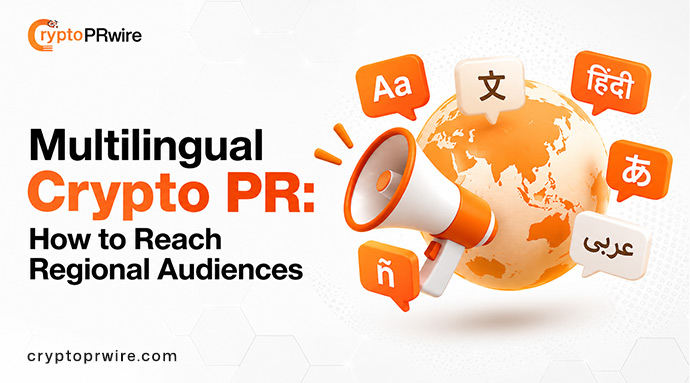
Your project has news to share. You translate the release, send it to publishers, and wait. But can local readers understand the offer, use the product, and get help?
Multilingual Crypto PR connects those parts. It brings your news to people in different languages while keeping the facts clear and consistent.
This guide explains the full process. You will learn how to choose markets, prepare local content, compare agencies, manage costs, and check results. It also covers funding news, token launches, exchange updates, and faster media outreach.
What Multilingual Crypto PR Includes in Practice
Multilingual Crypto PR means preparing and sharing crypto news in more than one language. The work includes writing, translation, local editing, media outlets selection, and reporting.
A complete campaign also checks what happens after someone reads the release. The linked page should explain the product, who can use it, and what limits apply.
Translation changes the words. Local editing makes sure the message fits the reader.
For example, a release may need a clear local launch time, a named currency, or a short explanation of staking. These details help readers follow the news without guessing.
| Campaign part | What your team needs to prepare |
| Audience plan | Target countries, languages, and reader needs |
| Source draft | Approved news, figures, quotes, and dates |
| Local versions | Clear copy checked by fluent editors |
| Media plan | Relevant outlets and publishing terms |
| Destination page | Useful information in the reader’s language |
| Report | Live links, costs, visits, and useful responses |
Step 1: Set One Clear Goal for Your PR Campaign
Start by deciding what readers should learn and do.
A wallet launch may aim to bring users to a setup guide. A funding announcement may seek business inquiries. An event campaign may focus on registrations.
Write your goal in one sentence:
“Help eligible Hindi-speaking users learn about our new wallet feature and read the setup guide.”
This is a planning example, not a claim about campaign results.
Next, choose one main action. Avoid sending readers toward several unrelated tasks.
Use a clear button or link, such as:
-
Read the product guide.
-
View the launch details.
-
Register for the event.
-
Contact the business team.
Before moving on: Make sure the page needed for that action exists and works.
Step 2: Choose Countries and Languages You Can Support
Choose a specific market before booking media.
Check whether people in that country can use your product or join the offer. Then review your own website visits, support requests, and community questions for language needs.
Do not assume that one language covers one country. Also, do not treat Asia or Europe as a single audience.
Build a short brief for each market:
| Planning question | Required answer |
| Who are the readers? | Users, developers, partners, or eligible investors |
| Where are they? | Named countries or regions |
| What do they need? | The question your news answers |
| Which language fits? | Language and any important local usage |
| Can they use the offer? | Access rules and restrictions |
| Can you help them? | Support language and working hours |
For Asian and European outreach, repeat this process country by country. Choose markets where your news is relevant and your team can serve readers.
Before moving on: Confirm product access and support limits for each target market.
Step 3: Build One Fact Sheet for All Language Versions
A shared fact sheet keeps every release aligned.
Include the project name, announcement, launch status, dates, fees, limits, and approved contact details. Add links to the records your team uses to verify each claim.
For token news, include the ticker, network, contract address, supply, and any lock periods that apply.
Mark future items clearly:
-
Live: Available now.
-
In testing: Being checked before release.
-
Planned: A future goal that may change.
Use a crypto press release template to organize these facts before translation begins.
Assign one person to approve changes. If a date changes, that person should update the source sheet and tell every local editor.
Before moving on: Remove claims your team cannot support.
Step 4: Write a Source Draft That Readers Can Follow
Write the main draft in simple words.
The opening should tell readers who made the announcement, what changed, when it happened, and where it applies.
Then explain:
-
What the product or update does.
-
Who can use it.
-
How users can access it.
-
Which costs and limits apply.
-
Where readers can learn more.
Use short sentences. Explain technical terms when they first appear.
For example, replace:
“Our platform delivers advanced cross-chain functionality.”
With:
“Our tool lets users move supported tokens between blockchains.”
Then name the supported networks and explain the fees.
For joint news, make each company’s role clear. A blockchain partnership announcement should state what each side has agreed to do and whether the work is live or planned.
Before moving on: Check that the headline describes the actual news.
Step 5: Adapt the Draft and Review Each Local Version
Give translators the source draft, fact sheet, and audience brief together.
Create a short list of terms that must stay consistent. Include product names, blockchain terms, token symbols, and approved descriptions.
Keep contract addresses exact. Check copied addresses character by character against the approved source.
A fluent editor should review:
-
Meaning and natural wording.
-
Names, figures, and dates.
-
Technical terms.
-
Quotes and their tone.
-
Access rules.
-
Risk notices.
-
Links and calls to action.
A Simple Example of Clear Regional Launch Wording
Consider this made-up draft:
“Our wallet is now open to everyone across Asia.”
If the launch covers only selected countries, use a more precise line:
“Our wallet is now available in the countries listed on our service page.”
Where possible, name those countries in the release itself.
AI can help prepare a translation draft. A person should still approve the final meaning, especially where money, fees, or eligibility are involved.
Before moving on: Record who approved each language version.
Step 6: Prepare Clear Information for Global Investors
A funding campaign needs more than a translated sales message.
Prepare an information page that explains the business and the funding announcement. Include only details your team is ready and permitted to publish.
Useful information may include:
-
The problem the project aims to solve.
-
What the team has built.
-
Who leads the project.
-
The funding stage.
-
How funds will be used.
-
Confirmed funding terms.
-
Key risks and next steps.
-
A business contact.
Keep funding targets separate from money received. “Seeking $2 million” and “raised $2 million” describe different events.
Also distinguish business funding from a public token sale. The audience, documents, and review needs may differ.
For Multilingual Crypto PR aimed at investors, translate the key decision documents as well as the release. Readers should be able to understand the terms behind the announcement.
Before moving on: Confirm who may receive or act on the offer.
Step 7: Adjust the Plan for ICO, IEO, and IDO Campaigns
Token launch campaigns need a clear explanation of how participation works.
An ICO generally involves a project-led token offer. An IEO uses an exchange’s sale process. An IDO commonly uses a decentralized launch platform.
Check the actual setup rather than relying on the label.
| Campaign | Information the release should explain |
| ICO | Official sale page, token terms, eligibility, payment methods, and risks |
| IEO | Confirmed exchange, sale rules, account requirements, and schedule |
| IDO | Confirmed platform, network, wallet needs, and allocation process |
Separate these milestones:
-
Sale opening.
-
Sale closing.
-
Token claim.
-
Token generation.
-
Start of trading.
They may happen on different dates. Do not imply that buying in a sale means trading starts at once.
Before moving on: Match all dates and rules with the official sale information.
Step 8: Choose an Agency and Compare Its PR Packages
The best multilingual crypto PR agency for your campaign should fit your audience, scope, and budget.
Ask for examples in the languages you need. Have a fluent reader check the samples. Then request the actual media list.
When comparing crypto PR platforms and services, use the same brief for every quote.
| Item to compare | What to confirm |
| Translation | Languages included and who checks the copy |
| Media | Named outlets and relevant regional coverage |
| Editing | Review rounds and final approval rights |
| Timing | Expected publication window |
| Labels | How paid content will be identified |
| Corrections | Process for fixing factual errors |
| Reporting | Live links and available placement details |
| Cost | Full price, optional work, and extra charges |
For global token launches, ask who will manage changes across languages. A low quote loses value if it leaves your team to repair errors without support.
Before moving on: Get the scope and publishing terms in writing.
Keep a Startup Budget Focused on Essential Work
Affordable multilingual crypto PR packages should have a clear scope.
Start with one strong announcement and a small set of relevant markets. Spend on accurate writing, local editing, and suitable media before adding more languages.
Ask whether the quote includes images, urgent delivery, revisions, and taxes. Compare total costs rather than the headline price.
Do not cut the review step simply to increase the number of placements.
Step 9: Prepare for Fast Coverage and Listing Updates
A complete brief can reduce avoidable publishing delays.
Send the approved release, local versions, fact sheet, images, official links, and contact details together. Name one person who can answer questions and approve edits.
Confirm the publishing window before booking. Ask whether weekends, translation, or revisions affect delivery.
Paid placement and independent coverage work differently. A publisher may agree to a schedule for a booked post. A journalist decides whether to cover a pitched story.
Explain What PR Can Do for Exchange Listing News
Crypto PR can help readers find and understand a confirmed exchange announcement. It can also explain project milestones clearly.
It cannot promise exchange approval.
If a provider offers “listing support,” ask what that means. Application help, introductions, and media publication are separate tasks.
Do not call a listing confirmed until you have confirmation from the exchange. Keep sale participation, deposits, withdrawals, and trading times separate.
Before moving on: Check every exchange claim and publishing deadline.
Step 10: Check Live Coverage and Measure Useful Results
Open each published page and compare it with the approved draft.
Check headlines, figures, dates, links, risk wording, and images. For errors, send the exact faulty text and the correct replacement.
Then measure results against the goal from Step 1.
| Campaign goal | Useful result to track |
| Explain a product | Visits to the product guide |
| Reach business readers | Relevant business inquiries |
| Support developers | Visits to technical documents |
| Promote an event | Completed registrations |
| Explain a launch | Visits to verified launch information |
Use the same reporting period for each language. Keep paid placements separate from independent coverage.
Record costs by market, too. Where tracking is reliable, divide campaign cost by useful responses to compare results. Small samples need careful judgment.
Before moving on: List what worked, what confused readers, and what needs to change.
Keep Your Regional Campaign Useful After Publication
Multilingual Crypto PR continues after the release goes live.
Keep a record of each page, its language, its owner, and its last review date. When fees, dates, or access rules change, update the source sheet and affected pages.
The benefit is clear: readers can get useful project news in a language they understand. The work also brings costs, editing needs, and ongoing upkeep.
Start with markets your team can support well. Expand when you can keep every version accurate and respond to the people your campaign reaches.
Disclaimer: This article is for informational purposes only and is not financial advice. Please do your own research (DYOR) and consult a licensed financial advisor before investing.
Kartik Sharma is a content strategist and crypto PR writer specializing in blockchain, Web3, and digital marketing. With a passion for simplifying complex topics, he crafts SEO-driven content, press releases, and guides that help crypto startups gain visi