
- Home
- Crypto Blog
- IDO Press Release Distribution: The Complete Guide
IDO Press Release Distribution: The Complete Guide
IDO Press Release Distribution helps a project share verified news about an initial DEX offering. A useful release tells readers what will happen, when it will happen, where to check the facts, and what risks remain.
That matters when sale terms can change close to launch. A new contract address, revised access rule, or delayed start time can make an older announcement misleading. This guide shows teams how to check the facts, write the release, plan its distribution, and measure what happens next.
Editorial analysis: For an IDO announcement, the most useful detail is often the easiest to miss: a clear link between each sale claim and the project’s current, official evidence. This is an editorial assessment, not a claim that distribution leads to token demand.
What IDO Press Release Distribution Covers
An initial DEX offering, or IDO, is a token offering linked to a decentralized exchange or launch platform. The project’s sale rules may involve wallet access, allowlists, token claims, or trading plans. Those details vary by offering, so a release must describe the specific sale rather than treat every IDO the same.
Distribution means sending the approved announcement to relevant publishers and sharing it through the project’s official channels. The release can help readers find the primary information. It does not replace sale documents, legal review, or independent research.
A token sale can also raise legal questions that depend on its facts and location. The U.S. Securities and Exchange Commission says securities laws apply when a crypto asset is offered or sold as a security. Teams should have qualified counsel review claims and access restrictions before publication.
The launch facts readers need first
Before drafting, gather one approved record of the sale. The facts box below is a template, not data from a live IDO.
Fact | What the release should state |
Project and token | Official names and token symbol |
Blockchain | Network used for the sale and token |
Sale timing | Start and end dates, times, and time zone |
Sale price | Price, currency, and any conditions |
Tokens for sale | Amount and share of total supply |
Fundraising terms | Target or cap, if officially disclosed |
Contract address | Address and link to the relevant explorer |
Access rules | Eligibility, location limits, and wallet steps |
Claims and vesting | Unlock date and any later release schedule |
Security review | Audit provider, report link, scope, and date, if available |
Market data | Live price, market cap, and trading volume only if trading has begun and a dated source supports them |
Do not fill gaps with estimates. A token that has not started trading has no verified live trading price, 24-hour change, market cap, or volume to place in a “current price” box.
Verify the IDO Before Writing the Release
Start with the project’s own announcement, sale terms, and contract details. Check each number against the latest approved source. If two official pages disagree, resolve the conflict before sending the release.
Use this pre-publication check:
Confirm the token symbol, chain, and contract address.
Check sale times in both UTC and the audience’s local time.
Match the sale price and token allocation to the current documents.
State how buyers receive tokens and when claims open.
Check country restrictions and any identity requirements.
Link directly to an audit report when one is claimed.
Record who approved the final facts and when.
An audit can describe work done on a defined contract at a given time. It should not be described as proof that a token sale has no risk. The same care applies to claims about staking rewards, future exchange access, and expected trading volume.
For a wider writing framework, use CryptoPRWire’s crypto press release writing guide. It covers how to put the news and supporting facts ahead of promotional language.
Find the News in the IDO Announcement
“An IDO is coming” may be too broad on its own. Tell readers what is new. The news might be a confirmed sale date, published token terms, an opened allowlist, or a change to the claim schedule.
The first paragraph should answer four questions: What changed? Who announced it? When does it take effect? Where can readers verify it? Put the project’s view in a clearly attributed quote. Then add the facts needed to assess that view.
For example, a spokesperson may explain why the project chose a given sale structure. That quote is the project’s opinion. The sale price, token supply, and contract address are factual claims that need their own checks.
A simple release structure
Headline: Name the project and the confirmed development.
Opening: Give the key fact and date in plain language.
Sale details: Add a compact facts table.
Project context: Explain what the product does and what exists today.
Attributed quote: Include a named, approved spokesperson if available.
Risks and access: State limits, dependencies, and material uncertainties.
Sources and contact: Point to official documents and a media contact.
If the sale is still subject to a final review, say so. Do not turn a planned listing, audit, or feature into a completed event.
Set a Distribution Timeline That Can Handle Changes
A useful schedule starts before the public sale. Give editors time to check the announcement, and leave room to correct it if the project changes a term.
Stage | Recommended editorial action |
Before approval | Collect documents and verify claims |
After terms are final | Lock the release and record its version |
Before publication | Recheck links, contract, dates, and access rules |
At publication | Post the official update and distribute the same facts |
After publication | Track coverage and send corrections when needed |
This is a workflow example, not a universal IDO timetable. A project should choose its publication window based on when its facts are final and when its intended readers can use them.
Meanwhile, keep a clear correction path. If the IDO start time moves, update the official source first. Then notify publishers that carried the earlier time. Mark the change and its time so readers can tell which version is current.
CryptoPRWire’s press release submission page describes editorial support, distribution coordination, and publication reporting options. Confirm a campaign’s outlet categories, schedule, and terms before it begins.
Choose Outlets by Audience and Editorial Fit
An IDO release can interest readers who follow token sales, the project’s blockchain, or its product area. Build a short list of outlets that serve those readers. Check each outlet’s submission rules, disclosure labels, and ability to publish a correction.
Ask what the distribution package actually includes. Does it offer a submitted release, a paid placement, or a chance for an editor to report the story? These outcomes are different. A placement is not independent editorial coverage.
Google’s spam policies specifically address optimized links in distributed press releases and paid articles. Paid links should carry the appropriate rel="sponsored" or rel="nofollow" value. Do not sell a campaign on a promised ranking result.
Prepare Sources, Images, and a Clear Quote
Give publishers a small source pack. Include the approved release, official sale page, token documents, contract explorer link, audit report if one exists, project logo, and media contact. Put the date and version on the fact sheet.
A chart is helpful only when it shows real, dated data. Before trading starts, a token allocation chart or vesting timeline is more useful than a price chart. After trading starts, a price or volume chart should name its data source, time range, and capture time. Market cap should not be calculated from an unsupported supply figure.
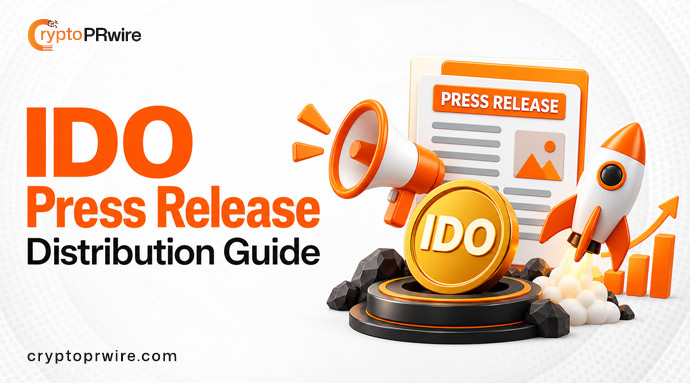
Featured image file name: ido-press-release-distribution-guide.webp
Featured image alt text: “IDO Press Release Distribution checklist and token sale timeline”
Compress the image for the page. The lead image should load promptly; images farther down the article can use lazy loading.
Measure Reach Without Confusing It With Results
After publication, record what each media outlet published and when. Separate paid placements from original reporting. Check that dates, links, figures, and disclosures survived publication.
Then measure actions that fit the campaign goal:
Live placements and accurate brand mentions
Referral visits to the official sale information page
Searches for the project name
Document downloads or qualified inquiries
Corrections requested and completed
Costs by outlet and campaign stage
Example analysis: If a campaign brings many visits but few readers reach the sale terms, the headline or landing page may need clearer context. If readers reach the terms but leave before the eligibility section, check whether access rules are easy to find. These are ways to investigate results, not proof that a press release caused later token activity.
The crypto press release ROI guide can help teams set a measurement plan before buying distribution.
Keep the Outlook Balanced
A well-sourced IDO press release can make a launch easier to understand and give journalists a clear point of contact. It can also spread a mistake quickly if the team publishes unverified sale terms. Reach does not establish a project’s quality, legal status, or likely token performance.
The strongest release is one that a reader can check: it has dated facts, direct sources, a named contact, and a clear way to find later updates. When a fact is still unknown, say that it is unknown.
Disclaimer
This article is for informational purposes only and is not financial advice. Please do your own research (DYOR) and consult a licensed financial advisor before investing.

Kartik Sharma is a content strategist and crypto PR writer specializing in blockchain, Web3, and digital marketing. With a passion for simplifying complex topics, he crafts SEO-driven content, press releases, and guides that help crypto startups gain visi