
- Home
- Crypto Blog
- How to List Your Crypto Project on Major News Aggregators
How to List Your Crypto Project on Major News Aggregators
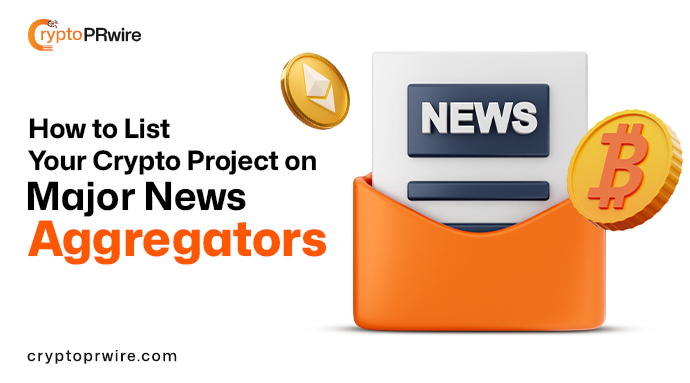
Getting your crypto project featured on major news aggregators is one of the highest-leverage media moves available to a Web3 team. A single placement on CoinDesk, CoinTelegraph, or Decrypt can generate thousands of page views, dozens of new community members, and a stream of follow-on coverage from smaller outlets that treat tier-one publications as editorial signals.
But these placements don't happen by accident. They require strategy, preparation, and a clear understanding of what each publication values.
Understanding the Crypto Media Ecosystem
Before pitching anyone, understand the landscape. The major news aggregators and editorial publications in Web3 serve different audiences with different editorial priorities.
CoinDesk is the most established crypto publication and operates with full editorial independence from its parent company (Bullish). It covers markets, regulation, enterprise blockchain, and culture. It has a strong institutional readership and sets the tone for much of the industry's news cycle.
CoinTelegraph publishes at higher volume and covers a broader range of crypto topics with a global audience. It accepts sponsored content alongside editorial, making it accessible to projects at various stages.
Decrypt skews toward a younger, more culture-oriented audience and covers NFTs, gaming, and DeFi trends alongside market news. Its editorial voice is more accessible and less finance-focused than CoinDesk.
The Block is research-heavy and caters to sophisticated industry participants, developers, investors, and analysts. Placements here signal technical credibility.
Blockworks focuses heavily on institutional finance and DeFi infrastructure, making it valuable for protocols and projects targeting professional investors.
Each of these has different submission processes, editorial preferences, and gatekeepers. Understanding the difference is foundational before you begin outreach.
What Gets You Coverage: The Journalist's Perspective
Crypto journalists receive hundreds of pitches per week. Most go unanswered. The ones that get coverage share a few common characteristics:
Genuine newsworthiness: A product launch, a significant partnership, a funding announcement, or a breakthrough metric (first protocol to achieve X, largest liquidity pool of type Y). Vague milestone announcements ("we've been working hard and are excited to share") don't qualify.
A clear story angle: Not just "what happened" but "why it matters." The best pitches frame the news within a larger industry narrative how your announcement connects to a regulatory development, a market trend, or a user problem the industry has been trying to solve.
Credible team and verifiable claims: Journalists will research your team. Anonymous or pseudonymous founding teams face a significantly higher bar for coverage than doxxed founders with verifiable track records.
No price or investment language: Editorial desks maintain strict separation from promotional content. Pitches that focus on token price upside, return potential, or calls to buy will be immediately discarded.
This connects to our broader discussion of what makes a crypto project trustworthy to the media legitimacy signals must be in place before media outreach begins.
Step-by-Step: Getting Listed on News Aggregators
Step 1: Build Your Press Infrastructure
Before you pitch, prepare:
A professional press kit (company overview, team bios with photos, project description, recent funding details)
A clear, jargon-minimized one-paragraph project description
High-resolution logo assets
A list of all relevant links (website, whitepaper, GitHub, social channels)
Your press kit should be downloadable as a PDF and hosted on a dedicated /press or /media page on your website.
Step 2: Develop Relationships Before You Need Them
The journalists who cover your space are your long-term partners, not one-time contacts. Follow them, engage with their content thoughtfully, and provide useful information without asking for coverage. When you have genuine news to share, a warm relationship dramatically increases your response rate.
Step 3: Write a Targeted, Concise Pitch
Your pitch email should be:
Under 200 words in the body
Written specifically for the publication and journalist (not a mass blast)
Clear about what happened, why it matters now, and why their readers care
Accompanied by a full press release as an attachment or embedded below
If you're launching a new product, this aligns closely with strategies in our Product & Platform Launches section.
Step 4: Leverage Wire Distribution as a Baseline
Even with the best editorial relationships, some announcements are better served through wire distribution. Press release distribution services that syndicate to crypto news aggregators ensure baseline visibility across dozens of outlets simultaneously. This creates a digital footprint that journalists can find when they later research your project.
Step 5: Follow Up Once
If you haven't heard back within 5 business days, send one follow-up email. One. Journalists who are interested will respond; those who don't are not interested in your current news, not in your project permanently.
CoinMarketCap and CoinGecko: Token Listing as PR
Beyond editorial media, token listing pages on CoinMarketCap and CoinGecko function as news aggregator pages for your project. A complete, well-maintained listing with updated project description, links, and social channels is often the first page an interested investor or journalist visits.
Submit to both with complete information, verified contract addresses, and updated links. These listings directly support your broader media strategy by providing a credible reference page that editorial contacts can cite.
Maintaining Media Relationships Over Time
The goal is not a single placement, it's an ongoing media presence. Projects that consistently show up in aggregator coverage have typically invested in:
Regular, newsworthy announcements (not manufactured milestones)
A designated PR contact who is responsive and easy to work with
Original research and data journalists can cite in broader stories
Founder availability for comment on industry developments
When you become a reliable source, someone who provides accurate information, meets deadlines, and offers genuine insight, editorial teams will come to you for quotes and context, not just coverage of your own announcements.
Conclusion
Getting listed and featured on major crypto news aggregators is not about gaming algorithms or sending the most pitches. It's about having genuine news, presenting it professionally, and building authentic relationships with the journalists who cover your space.
Start with your press infrastructure. Develop a compelling story angle. Target the right publications. And invest in relationships that extend beyond any single announcement cycle. The media coverage will follow.

Kartik Sharma is a content strategist and crypto PR writer specializing in blockchain, Web3, and digital marketing. With a passion for simplifying complex topics, he crafts SEO-driven content, press releases, and guides that help crypto startups gain visi