
- Home
- Crypto Blog
- How to Build a Personal Brand as a Crypto Founder
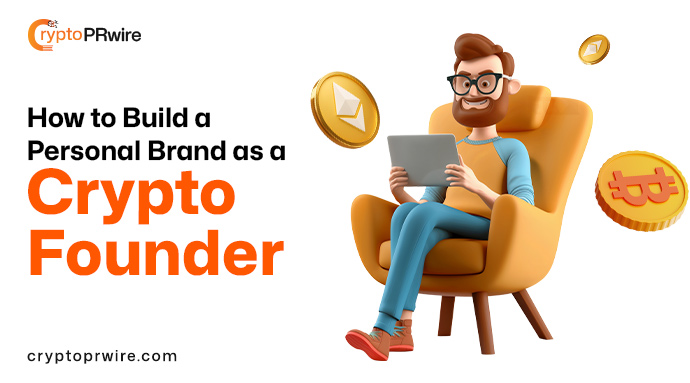
How to Build a Personal Brand as a Crypto Founder
In Web3, the founder's personal brand is often more powerful than the project's official brand. Investors bet on people before they bet on protocols. Communities rally around leaders before they rally around technologies. And journalists quote individuals, not companies.
Building a personal brand as a crypto founder is no longer optional, it's a strategic responsibility. This guide gives you a practical framework to do it intentionally, authentically, and effectively.
Why Your Brand Is Your Project's Brand
Consider the most trusted names in Web3: Vitalik Buterin, Andre Cronje, Do Kwon (a cautionary tale), Hayden Adams. Before you could name their projects, you knew their names. That's the power of crypto founder brand equity the project inherits credibility from the person building it.
This works at every level, not just for titans of the industry. Early-stage investors regularly describe backing "the founder, not the idea." A compelling, credible personal brand is one of the most effective fundraising tools available to a Web3 team, often more persuasive than a polished pitch deck.
Your personal brand also creates media surface area. When you're known as an expert commentator on DeFi trends, or as the person who called a specific regulatory development six months early, journalists add you to their contact lists. Your project gets coverage because you got coverage first.
Define Your Expert Territory
The most effective personal brands in crypto PR are defined by a specific domain of expertise, not a general "I'm in crypto" positioning.
Choose your territory based on where your genuine knowledge and your project's focus overlap:
DeFi lending protocols and capital efficiency
Crypto-native gaming economies
Cross-chain infrastructure and interoperability
Regulatory compliance in digital assets
DAOs and decentralized governance
The sharper the territory, the more memorable you become. Thought leadership in crypto is most effective when it's specific. "Crypto expert" means nothing. "The person who writes the most insightful analysis on L2 sequencer decentralization" means everything.
Build Your Content Engine
A consistent content output is the engine of personal brand building. You don't need to be everywhere, you need to be consistently present on two or three platforms that matter for your audience.
Twitter/X: The primary public square for Web3 discourse. Publish regular threads on industry developments, share your analysis of on-chain data, and engage substantively in conversations happening in your space.
Amplify your project's press releases through personal commentary. Our guide on using Twitter/X to amplify crypto press releases shows how to turn every announcement into a personal brand moment.
LinkedIn: Often overlooked by crypto founders, LinkedIn is where institutional investors and enterprise partners spend time. Long-form LinkedIn posts from a credible Web3 founder can reach audiences inaccessible through crypto-native platforms. See building a Web3 brand on LinkedIn for a full tactical guide.
Podcasts and YouTube: Getting on established shows is one of the fastest ways to reach new audiences with extended, nuanced conversations. A 45-minute podcast appearance conveys more credibility than 100 tweets. Our guide on getting featured on crypto podcasts and YouTube channels covers pitch strategy and production considerations.
Establish Speaking and Publishing Credentials
Media appearances and published bylines are your credibility signifiers. Build them systematically:
Guest articles: Pitch original analysis pieces to crypto publications. Lead with insight, not promotion. A piece titled "Why DeFi Lending Rates Will Normalize in 2025" is publishable. A piece titled "Why Our Protocol Is Changing DeFi Lending" is not (not as editorial content, anyway).
Conference speaking: Get on panels and stages at industry conferences. Start with regional events, build your track record, and work up to flagship conferences. Speaking slots are a form of social proof for early-stage crypto projects; they signal that peers in the industry recognize your expertise.
AMAs: Host regular AMAs on your community platforms and on external forums. An AMA done well with thoughtful, detailed answers can generate significant organic press coverage. Read our breakdown of how AMAs drive crypto brand visibility for execution guidance.
Managing Your Personal Brand During Crises
Every crypto project faces turbulent moments, market downturns, protocol exploits, regulatory scrutiny, competitive attacks. How founders communicate during these moments defines their personal brand more than any positive announcement.
Core principles for crisis communication:
Communicate early and directly with your community before the press does it for you
Take accountability for errors without deflection or excuse-making
Be specific about what went wrong and what you're doing to fix it
Follow up when you said you would
Founders who handle adversity with transparency and accountability often emerge with stronger personal brands than they had before the crisis. The crypto community is surprisingly forgiving of honest mistakes and brutally unforgiving of spin and silence.
Consistency Is the Foundation
The single most important driver of personal brand growth is consistency. Show up regularly. Publish on schedule. Respond to your community. Engage with journalists' work before you need their coverage.
Personal brand building is a long-horizon investment. The founders who are the most recognized voices in their sectors today have typically been publishing and engaging for years. But the compounding effects are real: every piece of content you publish, every media appearance you make, and every genuine community interaction builds on the last.
Start today. Define your territory. Choose your platforms. Build your content engine. And show up, every week, with something worth reading.
Kartik Sharma is a content strategist and crypto PR writer specializing in blockchain, Web3, and digital marketing. With a passion for simplifying complex topics, he crafts SEO-driven content, press releases, and guides that help crypto startups gain visi