
- Home
- Crypto Blog
- How to Build Token Launch Hype Without Overpromising
How to Build Token Launch Hype Without Overpromising
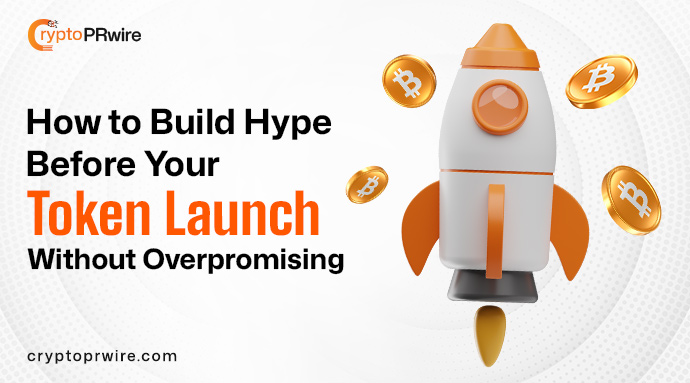
Learning how to build hype for a token launch is not about making louder claims. It is about giving people clear reasons to pay attention.
A strong token launch campaign uses facts, product updates and honest communication. It explains what the project does, why the token exists and what users can expect. It does not depend on price promises or fear of missing out.
This difference is important. A bold claim may attract quick clicks. Yet, it can also harm trust when users check the facts. A clear and verified update can build slower interest, but that interest is more likely to last.
Crypto projects also face advertising and financial promotion rules. These rules can vary by country, audience and token type. Teams should therefore review every important claim before it reaches the public.
This guide explains how to create token launch hype without hiding risks, making false promises or damaging the project’s name.
What Is Token Launch Hype?
Token launch hype is the attention created before or during a new token release. It may come from press release coverage, social posts, community activity, product updates, events or influencer content.
Hype is not always harmful. The problem begins when promotion becomes more important than the facts.
Responsible token launch hype should help users understand:
What the project has built
What problem the product solves
Why the token is needed
When the launch will take place
How token supply and vesting work
Which claims can be checked
What risks or limits users should know
Projects should treat hype as a result of progress. It should not be used to hide the lack of a product, unclear token utility or weak tokenomics.
Start With a Clear Token Launch Story
A token launch needs one clear story. Users should be able to understand that story without reading a long white paper.
Begin by answering four basic questions:
What problem does the project solve?
Who will use the product?
What role does the token play?
What has the team already completed?
Avoid starting with words such as “revolutionary,” “next big token” or “market-changing.” These terms are easy to use but hard to prove.
Instead, explain the product in plain language. Show what makes it useful. Support the story with a working demo, testnet, audit, user activity or another verified milestone.
The same message should appear across the website, press release, social media and KOL brief. Different channels can use different formats, but the main facts should stay the same.
Anchor Excitement to Verifiable Milestones
Replace vague posts such as “something big is coming” with progress that people can check.
Strong milestones may include:
A published third-party smart contract audit
A working testnet or product demonstration
A confirmed mainnet launch date
A partnership approved for public announcement
A new integration that users can test
A completed funding round with named participants
A confirmed team or advisor appointment
Verified community or product-use data
An audit is a useful trust signal, but it does not prove that a smart contract is fully safe. Projects should publish the report, name the audit firm and explain whether major findings were fixed.
Partnership claims also need care. A conversation or early discussion is not a confirmed partnership. Obtain written approval before using another company’s name or logo.
The same rule applies to exchange listings. Do not present an exchange discussion as a confirmed listing. Announce it only after the exchange has approved the public message.
These milestones give the crypto community useful information to discuss and share.
Publish Clear Tokenomics Before Creating Urgency
Tokenomics can have a major effect on how users judge a launch. Hiding supply or vesting details may create doubt, even when the project has a real product.
Before promoting the launch, publish:
Total token supply
Initial circulating supply
Public sale allocation
Team and investor allocation
Treasury and ecosystem allocation
Vesting periods
Token unlock dates
Token utility
Liquidity plans
Any power held by the project team
Use charts and tables when they make these details easier to understand. State the data source and update it when the plan changes.
Do not focus only on the public sale percentage. Users also need to understand how much supply may enter the market later.
If information is not final, label it as a draft. Add the date of the latest update so readers know which version they are viewing.
Avoid Price Promises and Unsupported Claims
Price predictions should not be used as the main reason to join a token launch. Claims such as “guaranteed profit,” “risk-free token” or “the next 100x coin” can mislead users and create serious trust problems.
Projects should also avoid:
Guaranteed return claims
Fixed price-growth targets
Comparisons that imply the same gains as another token
Claims that a token cannot lose value
False countdowns
Fake scarcity
Unverified user numbers
Unsupported exchange claims
Claims that an audit guarantees safety
Rules differ between countries. The legal treatment of a token may also depend on its design and how it is offered. Projects should seek qualified advice for each target market.
Create Urgency Without Using Fake Scarcity
Urgency can come from a real deadline or limited access. However, each claim must be accurate.
Examples may include:
A verified whitelist closing date
A public testnet registration deadline
A fixed community call or launch event
A confirmed token generation event date
A limited beta-testing group
A real remaining allocation
A message such as “200 places remain” should only be used when the number is correct and updated as it changes. The project should also explain what a “place” means.
Do not restart countdown clocks after they reach zero. Do not call an allocation limited if the team can expand it without notice.
Real deadlines help users plan. Fake urgency may increase short-term clicks, but it can damage long-term trust.
Use KOLs and Community Voices Carefully
Community members can help a project reach people who do not follow its main account. Yet, organic comments and paid promotions are not the same.
Projects should clearly label:
Paid KOL posts
Affiliate links
Sponsored reviews
Rewarded testimonials
Token-based compensation
Ambassador content
Promotional giveaways
A paid promoter should not present an advertisement as an independent opinion. The same disclosure should appear on every platform where the promotion is shared.
Create a written briefing document for every KOL. It should include:
Approved project facts
Tokenomics information
Restricted claims
Required disclosure wording
Official links
Correction procedures
Campaign dates
Contact details for questions
Learn more about planning KOL token launch campaigns before hiring promoters.
Build a Safe Token Launch Marketing Timeline
A planned campaign is easier to review than a rush of posts just before launch. The following timeline is a practical starting point, not a fixed rule.
Six to Eight Weeks Before Launch
Explain the product, target user and main use case. Publish the team details and working product evidence.
This stage should build understanding. It should not focus on price.
Four to Six Weeks Before Launch
Share the audit, testnet, product demo or confirmed integration. Begin answering common community questions.
A clear presale PR strategy can help teams organize these updates.
Two to Four Weeks Before Launch
Publish the token utility, supply, allocation and vesting information. Explain how users can find official links and avoid fake accounts.
Confirm any launchpad, exchange or partner announcement before publication.
Final Launch Week
Repeat the verified date, time zone, official contract address and approved participation steps. Warn users about impersonation and unofficial contract addresses.
Avoid adding new claims that have not passed review.
After the Token Launch
Report verified product, community and on-chain milestones. Do not select only the numbers that make the launch look successful.
A planned post-launch PR campaign can keep communication active after the first announcement.
Create a Claim Verification Process
Every public claim should have an owner and a source.
A simple review process can include:
The marketing team drafts the message.
The product team checks technical claims.
The finance or token team checks supply data.
A team member verifies links and dates.
Legal or compliance reviewers assess risky language.
An approved person signs off before publication.
Keep a record of the source used for each major claim. This may include an audit report, blockchain explorer, signed partner approval or internal product record.
Also create a correction policy. If a published statement is wrong, update it quickly and explain the correction when the error is material.
Reviewing a claim before publication usually costs less than correcting it after wide distribution.
What Does Token Launch PR Cost?
The cost of token launch PR depends on the campaign’s size and needs. There is no single suitable price for every project.
The main cost factors include:
Number of press releases
Writing and editing support
Target countries
Number and type of media placements
Campaign length
Translation needs
KOL or social promotion
Compliance review
Reporting and campaign tracking
Image, video or data-chart production
A small project with one verified announcement may need a focused campaign. A larger launch across several countries may need multiple releases, local editing and a longer media plan.
Ask for a written quote that explains what is included. It should state the number of releases, distribution scope, editorial support, expected timeline and reporting method.
Avoid providers that promise a token price increase, investor funding or guaranteed organic rankings. PR can improve reach and visibility, but it cannot control market results or Google rankings.
Projects can also use a crypto press release submission service when they have a verified announcement ready for publication.
Illustrative Token Launch PR Case Study
The following example is illustrative. It does not describe a real client or promise the same outcome.
A Web3 project plans to launch a utility token in eight weeks. It has a working testnet, a completed audit and a growing user group. However, its public message focuses too heavily on possible token demand.
The team changes its campaign in four ways:
It replaces price-focused posts with testnet demonstrations.
It publishes token supply and vesting details.
It gives KOLs a fact sheet and disclosure rules.
It creates three separate news moments around the audit, product and launch.
The team then measures:
Visits to the product page
Testnet registrations
Press coverage
Referral traffic
Community questions
Newsletter sign-ups
Corrections or complaints
Engagement from target regions
This approach gives the team better evidence about campaign quality. It does not treat token price as the only success measure.
How to Measure Responsible Token Launch Hype
High impressions do not always mean that a campaign is working.
Track metrics connected to real interest:
Product-demo visits
Testnet activity
Documentation views
Newsletter registrations
Event attendance
Qualified community questions
Referral traffic from media sites
KOL traffic by tracking link
Community retention
Verified wallet or product activity
Label each metric clearly. Do not present total social followers as active users. Do not present website visits as token buyers.
Compare results with the campaign goal. A product-led campaign may value demo use. A community campaign may focus on retention and useful discussion.
Build Trust Beyond Launch Day
A token launch is one event in a longer project journey. Trust can fall quickly if the team becomes silent after the token generation event.
Continue publishing:
Product updates
Roadmap progress
Governance changes
Security reports
Token unlock reminders
New integrations
Verified user data
Corrections to earlier information
A steady stream of honest updates can support trust better than one oversized announcement.
Disclaimer:
This guide is for general information only. It is not legal, financial or investment advice. Crypto promotion rules vary by country and may change. Projects should obtain qualified advice before promoting or offering a token.

Kartik Sharma is a content strategist and crypto PR writer specializing in blockchain, Web3, and digital marketing. With a passion for simplifying complex topics, he crafts SEO-driven content, press releases, and guides that help crypto startups gain visi