
- Home
- Crypto Blog
- Post-Launch PR: How to Sustain Coverage After TGE
Post-Launch PR: How to Sustain Coverage After TGE
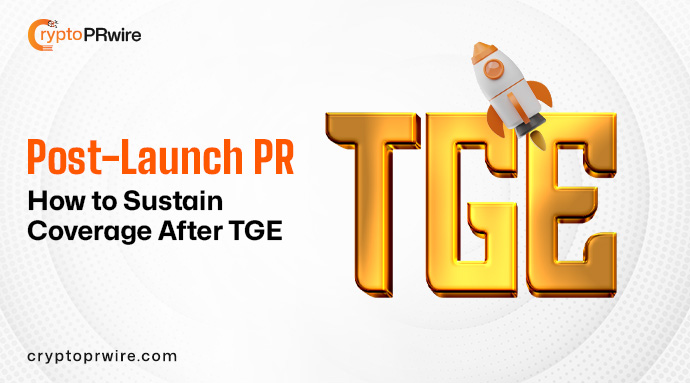
Media attention peaks on launch day and decays fast usually within 48 to 72 hours unless a project actively feeds it new angles. Post-launch PR is the discipline of treating the weeks after TGE as an ongoing campaign rather than a victory lap, and it's frequently the difference between a project that stays visible through its critical early months and one that fades from coverage right when investor confidence matters most.
Teams that plan for this decay in advance, rather than being surprised by it, tend to handle the post-launch period far more effectively. The goal isn't to manufacture artificial news, but to recognize and properly communicate the genuine milestones that naturally occur in the weeks following a launch.
Building a Post-Launch Content Calendar Before Launch Day
The most effective post-launch PR is planned before the token even launches, mapping out which milestones (staking go-live, exchange listings, integration partners, governance launch) will anchor press releases over the following four to eight weeks.
Projects that improvise post-launch content tend to go quiet right when momentum needs reinforcement most.
A simple post-launch calendar might include the following stages:
Week one: early holder and trading data, reported honestly
Weeks two to three: first major integration or listing milestone
Weeks four to six: staking or governance feature go-live
Weeks six to eight: a broader progress update tying milestones together
Turning Data Into a Story
Trading volume, holder count growth, or community size milestones can support a legitimate news angle "10,000 holders in the first week" is a publishable data point, provided it's accurate and framed modestly rather than as a victory claim that invites scrutiny from skeptical readers checking the figures independently.
Avoiding the Temptation to Inflate Early Numbers
Early post-launch data is often volatile and can look unimpressive in isolation. Resisting rounding up or cherry-picking metrics in press materials overstated early numbers tend to be checked against on-chain data by skeptical readers and can undermine credibility built during the launch phase.
A modest, accurate figure reported honestly tends to age much better than an inflated one that doesn't hold up to scrutiny a few weeks later.
Using Integration and Partnership News to Refill the Pipeline
Each new integration, wallet support addition, or partnership after launch is a legitimate, separate PR moment. Spacing these out rather than batching them into one release keeps the project appearing in news cycles repeatedly rather than in a single burst.
A steady cadence of smaller stories tends to generate more cumulative visibility over a quarter than a single large release followed by an extended period of silence.
Re-Engaging Media Contacts From the Launch Phase
Crypto Journalists who covered the original launch are a warm list for follow-up pitches on post-launch milestones, reference the original story when reaching out, and lead with what's genuinely new since they last covered the project.
This kind of warm follow-up consistently outperforms cold outreach to new contacts, since the journalist already has context and doesn't need to be convinced the project is worth covering from scratch, which saves valuable time for both sides.
Handling a Post-Launch Period With Limited News
Not every project has a steady stream of major milestones to announce in the weeks after TGE, and that's a common, manageable situation rather than a crisis. In these quieter periods, smaller but genuine updates, a development progress note, a community spotlight, an answer to a frequently asked question from holders can maintain a baseline of visibility without overstating their significance.
The goal during a quiet stretch is simply to avoid total silence, not to manufacture artificial milestones that don't yet exist.
Connecting Post-Launch PR to the Original Launch Narrative
The strongest launch communications tend to reference back to promises or themes established during the launch phase itself, showing concrete follow-through rather than introducing an entirely disconnected set of updates.
If the launch narrative emphasized a specific use case or community benefit, launch milestones that visibly deliver on that same theme reinforce the original story rather than starting from scratch each time.
This consistency matters to journalists who covered the launch and are deciding whether the project followed through, and it matters just as much to early community members evaluating whether their initial trust was well placed.

Kartik Sharma is a content strategist and crypto PR writer specializing in blockchain, Web3, and digital marketing. With a passion for simplifying complex topics, he crafts SEO-driven content, press releases, and guides that help crypto startups gain visi