
- Home
- Crypto Blog
- Earned vs Paid Crypto Media: What's the Difference?
Earned vs Paid Crypto Media: What's the Difference?
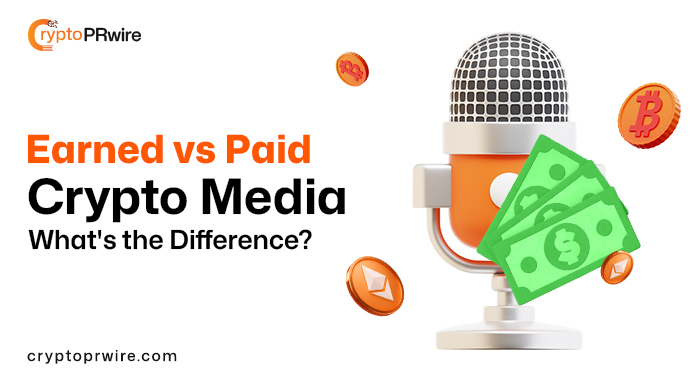
Every crypto project eventually faces the same strategic question: should you pay for press release distribution, or invest in earning editorial coverage? The answer isn't binary but understanding the difference between earned and paid crypto media is essential to building a communications strategy that actually moves the needle.
Both channels serve different purposes, generate different types of value, and require different skills to execute well. Many projects use them poorly because they conflate them.
What Is Earned Media in Crypto?
Earned media is coverage you receive because a journalist, editor, or publication independently decided your news was worth writing about. You didn't pay for the placement. You didn't control the content. An editorial decision was made that your story had value for their audience.
This is the gold standard of crypto PR. An earned feature in CoinDesk, Decrypt, or The Block carries an implicit endorsement, it signals to readers that a third-party editorial team decided your project was credible and newsworthy enough to cover. That signal is worth far more than any paid placement.
Earning this kind of coverage requires:
News that is genuinely novel, specific, and verifiable
A direct relationship with a reporter who covers your niche
A well-crafted pitch that arrives at the right time
A track record of delivering on what you promise
Earned media is slow to develop and unpredictable in timing. But when it works, it generates the highest-value outcomes in Web3 PR referral traffic, investor interest, and community growth that money can't directly buy.
What Is Paid Media in Crypto?
Paid crypto media encompasses any coverage or placement you pay for directly. This includes:
Press release wire distribution: You pay a distribution service to send your release to a network of outlets. Most of these outlets publish the release as-is, providing syndication and backlinks. Coverage volume is high; editorial endorsement is minimal to none.
Sponsored content: You pay a crypto outlet to publish an article, typically labeled "sponsored" or "partner content." The outlet's editorial team may or may not be involved in production. Disclosure requirements vary.
Native advertising: Content that appears alongside editorial content but is paid for by an advertiser. Common on major crypto media platforms.
Influencer or KOL partnerships: You pay a Key Opinion Leader to discuss or promote your project on their channel. This is paid social media, not press coverage.
The defining characteristic of all paid media is that the placement happens because money changed hands, not because an independent editorial decision was made.
The Credibility Gap Between Earned and Paid
Here is the most important distinction for your crypto media strategy: readers and investors differentiate between earned and paid coverage, even when they can't explicitly articulate the difference.
A Decrypt editorial feature about your DeFi protocol carries implicit credibility. A sponsored post on the same site does not and savvy crypto investors know the difference. Sophisticated institutional investors, in particular, weight earned editorial coverage far more heavily than paid placements when evaluating a project's legitimacy.
This doesn't mean paid media has no value. It means understanding what each type of media actually delivers.
What Each Channel Delivers
Earned media delivers:
Editorial credibility and third-party validation
Sustained referral traffic (great articles continue driving clicks for months)
Investor confidence signals
Journalist relationships that make future coverage easier
High-quality backlinks from authoritative domains
Paid wire distribution delivers:
Broad syndication across many outlets simultaneously
SEO value through volume backlinks
Consistent, reliable publishing timelines
Control over the content and messaging
Affordable per-release coverage for projects without agency budgets
Sponsored content delivers:
Guaranteed placement in target publications
Full control over messaging and narrative
Access to outlet audiences who wouldn't otherwise see your announcement
Potential for high engagement if the content is genuinely valuable
When to Use Each
The most effective blockchain PR distribution strategies use both earned and paid channels but in different contexts.
Use paid wire distribution for:
Routine product updates and milestone announcements
Partnership news where no major outlet has a direct relationship
Releases that need consistent timing and broad reach
Building SEO value through sustained backlink accumulation
Projects in early stages without established journalist relationships
Pursue earned coverage for:
Major announcements: funding rounds, mainnet launches, significant partnerships
Stories with genuine novelty that would interest readers beyond your existing community
Moments where third-party credibility is particularly valuable before a fundraise, before a token launch, during a market downturn when trust is paramount
Use sponsored content for:
Educational pieces that explain complex technology to new audiences
Situations where you need guaranteed placement in a specific high-traffic publication
PR campaigns where you need tight control over the narrative
The False Choice
One of the most common Web3 PR mistakes is treating earned and paid media as mutually exclusive. Projects in the space often go one of two extremes: they either spend all of their PR budget on paid syndication and neglect journalist relationship-building entirely, or they focus entirely on earned media pitches and miss the SEO and syndication value of regular wire distribution.
The most effective strategy combines both channels in a planned ratio. For most early-stage crypto projects, a baseline of paid wire distribution for every release combined with earned media pitches for the two or three most newsworthy announcements each quarter is the right starting point.
As the project matures and journalist relationships deepen, the ratio shifts. More earn coverage becomes achievable without increasing effort, while paid distribution continues building SEO and syndication value in the background.
Measuring the ROI of Each Channel
Earned media metrics to track:
Number of editorial pickups per release
Domain authority of pickup outlets
Referral traffic to your site from coverage
Investor inquiries generated by specific articles
Social shares and engagement on covered pieces
Paid distribution metrics to track:
Number of syndication outlets published
Domain authority of syndication partners
Backlinks generated per release
Keyword rankings influenced by distributed releases
Referral traffic from wire distribution outlets
Over time, these metrics help you refine where to invest more and where to scale back. A paid distribution campaign generating 200 backlinks from low-DA outlets may be less valuable than five earn placements in top-tier crypto media, even if the volume looks impressive.
Understanding the distinction between earned and paid crypto media is not just academic, it changes how you allocate budget, how you structure your PR calendar, and how you measure success.
Projects that understand this dynamic build more efficient, more credible, and more durable communications programs than those treating all coverage as interchangeable.

Kartik Sharma is a content strategist and crypto PR writer specializing in blockchain, Web3, and digital marketing. With a passion for simplifying complex topics, he crafts SEO-driven content, press releases, and guides that help crypto startups gain visi