
- Home
- Crypto Blog
- Crypto Media Database: DeFi, NFT, AI, Gaming & Web3
Crypto Media Database: DeFi, NFT, AI, Gaming & Web3
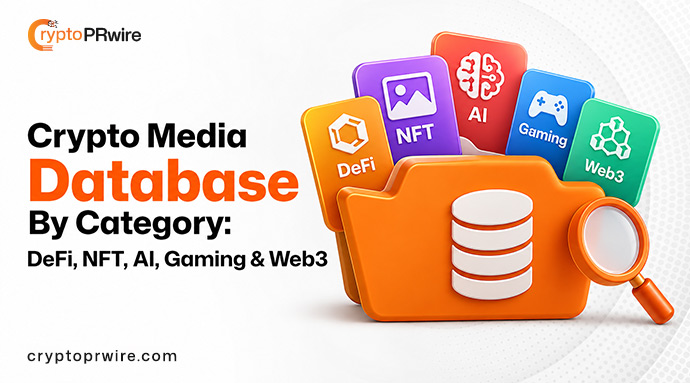
A Crypto Media Database helps crypto teams find news websites that match their topic. This can make media research faster and more focused.
The crypto media space is large. It includes sites that cover DeFi, NFTs, AI, gaming, Web3, Bitcoin, blockchain, exchanges, and other digital asset topics.
However, not every crypto news site covers every topic.
A DeFi project may need media that often writes about decentralized finance. An NFT project may need sites that focus on digital art, collectibles, or Web3 culture. A blockchain game may need gaming and GameFi media.
This is why a category-based media database can be useful. It helps teams look for media based on the subject of their news.
What Is a Crypto Media Database?
A Crypto Media Database is a list of media websites that publish crypto, blockchain, and Web3 content.
A good database can provide more than website names. It can also group outlets by topic and provide useful media details.
These details may include:
Media category
Website name
Website URL
Country
Language
Main topic
Estimated website traffic
Domain metrics
Google News status
Editorial focus
Publishing information
PR or submission options
The main goal is simple: help users find the right media for the right story.
For example, a company announcing a new DeFi product does not need to contact every crypto website. It can first look for media that already covers DeFi.
This can save time and make outreach more relevant.
For teams that need help with broader crypto PR planning, the crypto press release distribution section can also be used as a starting point.
Why Use a Crypto Media Database by Category?
Crypto is no longer one single topic.
The industry now has many areas. Each area has its own readers, projects, products, and news.
A category-based database helps separate these areas.
For example:
DeFi media can focus on decentralized finance.
NFT media can focus on digital assets and collectibles.
AI media can cover artificial intelligence and blockchain.
Gaming media can cover GameFi and blockchain games.
Web3 media can cover decentralized apps and Web3 products.
This type of sorting can make media research easier.
It also helps PR teams avoid sending the same story to websites that may not cover that topic.
DeFi Media Database
DeFi means decentralized finance.
DeFi projects can include decentralized exchanges, lending platforms, stablecoin products, staking platforms, wallets, and other financial applications built on blockchain networks.
Because DeFi has its own terms and topics, it can help to find media that already understands the sector.
A DeFi media database can include websites that regularly cover:
Decentralized finance
DeFi protocols
Decentralized exchanges
Lending platforms
Stablecoins
Staking
Liquidity
Token launches
DeFi security
Protocol updates
For example, a DeFi protocol launching a new product may want to find outlets that have covered similar protocols before.
The PR team can then review the site's recent stories and decide whether it is a good match.
This is more useful than choosing outlets only because they have high traffic.
What to Check in DeFi Media
Before adding a DeFi website to a media list, check its recent content.
Look for:
Recent DeFi articles
Active publishing
Clear editorial topics
Relevant audience
Author information
Submission rules
Sponsored content rules
A site that has not published DeFi news for a long time may not be the best fit.
NFT Media Database
NFT stands for non-fungible token.
NFT media covers a wide range of topics. These can include digital art, collectibles, gaming assets, creator projects, marketplaces, memberships, and digital ownership.
The NFT sector has also become closely linked with Web3 gaming and digital communities.
A category-based NFT media list can help teams find websites that cover:
NFT projects
NFT marketplaces
Digital art
Digital collectibles
NFT gaming
Web3 creators
Digital ownership
Metaverse projects
NFT technology
Web3 culture
For an NFT announcement, the story should match the audience of the publication.
For example, an NFT gaming announcement may be better suited to gaming and GameFi media than a site focused mainly on NFT art.
The same project can therefore use different media categories for different announcements.
AI Crypto Media Database
Artificial intelligence is now part of many blockchain projects.
Some projects use AI for data analysis, automation, trading tools, agents, decentralized computing, or other blockchain applications.
This creates a growing need for media that understands both AI and crypto.
An AI crypto media database can include outlets that cover:
AI and blockchain
AI agents
Crypto AI projects
Decentralized computing
Blockchain data
AI infrastructure
Web3 technology
Automation
AI-based blockchain applications
The key point is relevance.
A company launching an AI-powered blockchain product may want to reach both crypto readers and technology readers.
A category-based media database can help identify both groups.
For more information about preparing announcements for blockchain audiences, teams can also review the Web3 press release distribution resource.
Gaming and GameFi Media Database
Blockchain gaming combines gaming with blockchain technology.
GameFi projects may use NFTs, tokens, digital assets, and blockchain networks as part of their games or player systems.
Gaming media has a different audience from general crypto media.
Players may care about gameplay, game quality, features, characters, and new releases. Crypto readers may care more about tokens, wallets, and blockchain technology.
Because of this, gaming projects can benefit from finding media that covers both areas.
A gaming media database can include:
Blockchain gaming sites
GameFi media
Web3 gaming publications
NFT gaming websites
Gaming technology media
Metaverse gaming sites
Esports and blockchain outlets
When building a list, review the publication's recent gaming coverage.
Check whether the site talks about actual games and gaming products. This can help separate useful gaming media from sites that only mention gaming as a small part of their crypto media coverage.
Web3 Media Database
Web3 is a broad category.
It can include decentralized applications, wallets, DAOs, blockchain infrastructure, digital identity, creator platforms, decentralized social networks, and other blockchain-based products.
Because Web3 covers many areas, a Web3 media database can be useful for projects that do not fit into only one category.
A Web3 media list may include sites covering:
Web3 applications
Blockchain infrastructure
DAOs
Digital identity
Decentralized social media
Web3 wallets
Developer tools
Creator platforms
Metaverse projects
Digital ownership
A Web3 story should still be matched with the right publication.
For example, a developer tool may need technology-focused Web3 media. A creator platform may need publications that cover creators, NFTs, and digital communities.
What Information Should a Crypto Media Database Include?
Not all media databases provide the same information.
A useful database should make it easy to compare publications.
Important fields can include:
1. Media Category
The category tells users what type of stories a publication covers.
Examples include:
DeFi
NFT
AI
Gaming
Web3
Bitcoin
Blockchain
Exchanges
2. Website URL
The website address makes it easy to check the publication directly.
Users should visit the site and review recent articles before adding it to a campaign.
3. Country
Country information can help teams find media for a specific market.
A project launching in a certain region may want publications with readers in that region.
4. Language
Language is also important.
A global project may need English-language media. A regional campaign may need publications in a local language.
5. Editorial Focus
Editorial focus shows what the publication writes about most often.
This can help teams decide if the outlet fits their announcement.
6. Website Metrics
Some databases provide estimated traffic or SEO metrics.
These numbers can help with research. However, they should not be treated as exact readership figures.
Metrics can change over time.
7. Google News Visibility
Google News visibility can also be useful when researching news publications.
However, visibility can change. Teams should check the publication and current search results before making decisions.
How to Build a Crypto Media Database
Building a media database does not have to be difficult.
Start with the type of announcement.
For example:
DeFi launch: Search for DeFi and blockchain finance publications.
NFT launch: Search for NFT, digital art, collectibles, and Web3 publications.
AI product: Search for AI, blockchain technology, and Web3 technology media.
GameFi launch: Search for blockchain gaming, NFT gaming, and GameFi media.
Web3 product: Search for Web3, blockchain infrastructure, and decentralized technology media.
After finding possible outlets, place them into separate categories.
A simple structure could be:
DeFi
NFT
AI
Gaming
Web3
Bitcoin
Blockchain
Exchanges
Finance
Mining
This makes future research much easier.
How to Check a Crypto Media Outlet
A media database should be used as a research tool.
Do not add an outlet simply because its name appears in a list.
Check the website first.
Review:
Recent publishing dates
Recent crypto stories
Main editorial topics
Article quality
Author information
Contact information
Submission rules
Sponsored content policies
Audience location
Available media metrics
Also check whether the website is still active.
An old media list can contain websites that have stopped publishing or changed their focus.
This is why media databases should be reviewed and updated regularly.
Crypto Media Database for PR Outreach
A categorized database can help PR teams plan outreach around each announcement.
The process can be simple.
Step 1: Define the News
Start by asking what the announcement is about.
Is it a DeFi product? An NFT launch? An AI platform? A blockchain game? A Web3 partnership?
Step 2: Choose the Media Category
Select the category that best matches the story.
Do not choose a category only because it has many websites.
The category should match the news.
Step 3: Review Relevant Publications
Read recent stories from each outlet.
Look for similar announcements and topics.
Step 4: Create a Shortlist
Remove sites that do not fit.
Keep the publications that match the subject and audience.
Step 5: Check Publishing Rules
Every publication may have its own rules.
Check whether it accepts press releases, contributed content, interviews, announcements, or other formats.
Step 6: Prepare the Story
Write a clear press release with useful facts.
A standard crypto press release can include a headline, dateline, introduction, executive quote, key features, links, media contact, and company profile.
Teams can use the submit crypto press release page when they are ready to prepare a release for distribution.
Why Media Relevance Matters More Than a Long List
A long list is not always a better list.
Suppose a company has a gaming announcement.
A database with 500 general crypto websites may look useful. But only some of those websites may have regular gaming coverage.
A smaller list of relevant gaming and GameFi publications can be easier to review.
The same idea applies to DeFi, NFT, AI, and Web3.
The goal is not only to collect websites.
The goal is to organize useful media information so that teams can make better outreach choices.
How to Keep a Crypto Media Database Updated
Crypto media changes quickly.
New websites appear. Existing sites change their topics. Some stop publishing. Others change their names or business models.
For this reason, a media database should be checked often.
Useful update tasks include:
Remove inactive websites.
Check website URLs.
Review recent articles.
Update categories.
Check contact information.
Review editorial policies.
Update traffic estimates.
Recheck Google News visibility.
Add new specialist publications.
Remove duplicate entries.
Regular updates help keep the database useful.
Crypto Media Database for Different Crypto Projects
Different projects can use different media categories.
DeFi Projects
Focus on:
DeFi publications
Blockchain finance media
Stablecoin media
Staking publications
Protocol-focused outlets
NFT Projects
Focus on:
NFT media
Digital art publications
Collectibles media
Web3 culture sites
NFT gaming outlets
AI Crypto Projects
Focus on:
AI media
Blockchain technology sites
Web3 technology publications
AI agent coverage
Decentralized computing media
Gaming Projects
Focus on:
GameFi media
Blockchain gaming sites
NFT gaming publications
Gaming technology outlets
Web3 gaming media
Web3 Projects
Focus on:
Web3 publications
Blockchain infrastructure media
DAO coverage
Decentralized application media
Developer-focused outlets
This category approach makes it easier to build a media list that fits the actual news.
Final Takeaway
A Crypto Media Database can help crypto companies, PR teams, and Web3 projects organize media research.
The most useful approach is to divide publications by topic.
DeFi projects can focus on DeFi media. NFT projects can research NFT publications. AI projects can look for AI and blockchain media. Gaming companies can target GameFi and blockchain gaming outlets. Web3 companies can explore broader Web3 publications.
The value of a database comes from how well it connects a story with a relevant audience.
Before using any media outlet, check its recent articles, editorial focus, activity, audience, and publishing rules. Media metrics can help with research, but they can change and should not be treated as guarantees.
A clean, updated, category-based media database can make crypto PR research more organized and help teams spend less time searching through unrelated websites.

Kartik Sharma is a content strategist and crypto PR writer specializing in blockchain, Web3, and digital marketing. With a passion for simplifying complex topics, he crafts SEO-driven content, press releases, and guides that help crypto startups gain visi