
- Home
- Crypto Blog
- Building a Web3 Brand from Zero: The Complete Guide
Building a Web3 Brand from Zero: The Complete Guide
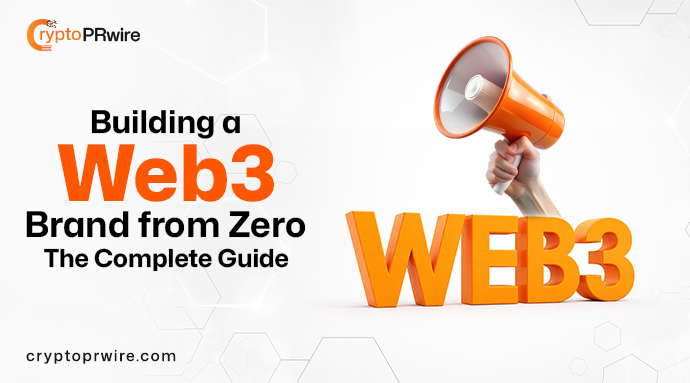
Building a Web3 brand from zero is one of the most demanding challenges in modern marketing. You're not just competing against thousands of other projects for attention, you're fighting skepticism, regulatory noise, bear market fatigue, and a community that has seen more rug pulls than product launches. In this environment, brand is not optional. It's survival.
This guide walks you through every layer of Web3 brand building: from your first naming decision to your first media mention, and every community interaction in between.
Why Branding Matters More in Web3 Than Anywhere Else
In traditional industries, brand builds over years. In Web3, perception forms in hours. A single viral thread can catapult an unknown project to the front page of CoinDesk, or it can bury a legitimate team under accusations of being a scam. The speed of information and misinformation in crypto makes brand infrastructure non-negotiable.
A strong Web3 brand does three things:
Signals legitimacy to investors, media, and future partners
Attracts and retains community during volatile market cycles
Creates narrative gravity the ability to pull coverage, conversation, and capital without paying for every impression
Without intentional branding, you are not "brand-neutral." You are letting others define you, and in crypto, that rarely goes well.
Step 1: Define Your Core Identity
Before you design a logo or write a tweet, answer these foundational questions:
What problem do you solve? Not "we're building a decentralized [X]" that's the mechanism, not the mission. What human or economic problem disappears because of your project?
Who are you building for? DeFi power users? Web2 developers making their first chain integration? NFT collectors? Institutional investors? Your audience determines your language, your tone, and which platforms to prioritize.
What makes you different? This is your positioning statement. In a market where hundreds of projects share the same category, your differentiation is everything. More on this in our guide on how to position your crypto project in a crowded market.
What do you stand for beyond profit? The Web3 community is increasingly values-driven. Projects that articulate a clear mission decentralization, financial inclusion, creator ownership attract deeper loyalty than those who only talk about token price.
Document these answers. They become your brand bible, the source of truth every team member and marketing partner must align with.
Step 2: Build Your Visual Identity
Your visual identity is the first signal of professionalism. It doesn't need to be expensive, but it must be intentional.
Name and Symbol: Your project name should be memorable, pronounceable across languages, and available as a domain and social handle. Run trademark checks early. The symbol if you have one should be distinctive at small sizes, since most users will see it as a tiny avatar or token icon.
Color Palette: Choose 2–3 primary colors that work in both dark and light modes. Web3 communities live on platforms with dark interfaces (Discord, Telegram, trading terminals), so your brand must look intentional on dark backgrounds.
Typography: Choose fonts that telegraph your positioning. Serif fonts signal heritage and trust. Clean sans-serifs signal modernity and efficiency. Avoid generic defaults like Arial or Roboto pick something with character.
Visual Consistency: Your logo, website, social banners, and community headers should all feel like they belong to the same universe. Branding consistency across crypto platforms is a force multiplier it trains audiences to recognize you instantly.
Step 3: Establish Your Brand Voice
Visual identity gets attention. Voice builds loyalty. Your brand voice is the personality that comes through in every piece of communication tweets, press releases, Discord announcements, whitepaper introductions.
Decide early: Are you authoritative or accessible? Technical or educational? Punchy or measured? Playful or serious?
Most successful crypto brands blend two seemingly opposite tones for example, technically rigorous but human-first, or bold and irreverent but deeply principled. For a detailed breakdown of this process, see our dedicated guide on how to create a brand voice for your crypto project.
Consistency matters as much as quality. A brand that sounds different across platforms creates confusion. Confusion erodes trust.
Step 4: Build Community Infrastructure
In Web3, your community is your brand distribution network. Before you launch media outreach, you need a home base where early supporters can gather, participate, and amplify.
Discord: Your primary community hub. Organize channels thoughtfully separate general chat from announcements, governance, and support. Run regular engagement events, AMAs, and feedback sessions. See how AMAs drive crypto brand visibility for tactical advice.
Telegram: Faster and more mobile-friendly than Discord. Best for announcements and quick community updates. Some projects run a Telegram community channel as their primary touchpoint, particularly for global audiences.
Both platforms are PR engines when managed well. As we explore how Discord and Telegram communities drive PR coverage, a vibrant community creates organic media momentum journalists look for projects with engaged followings, not ghost towns.
Step 5: Launch Your Content Foundation
Before you pitch to the media, you need owned content that establishes authority. This includes:
Website: Your website is your HQ. It should clearly explain what you build, why it matters, and who's behind it. A credible team page with real names and verifiable backgrounds is one of the strongest trust signals you can deploy. Learn more about the full set of signals that make a crypto project trustworthy to the media.
Blog / Knowledge Hub: Publish educational content before you publish promotional content. Explain concepts, share market analysis, document your building process. This creates a foundation for SEO and positions your team as thought leaders in the crypto space.
Whitepaper or Technical Documentation: For any project with a protocol or token, a well-written whitepaper is not optional. It's the document that VCs, journalists, and serious community members will read first. Whitepapers and research reports are among the most effective PR momentum drivers in Web3.
Step 6: Begin Media Outreach
Once your identity, voice, community, and content foundation are in place, you're ready to earn media attention. Start by identifying the right targets. Our rundown of the best crypto media outlets to target in 2025 is a good starting point.
Your first press release should focus on your announcement, not your token price. Journalists want stories: why you're building this, what problem you solve, and what makes your team uniquely qualified. A well-structured press release distributed to the right outlets can trigger a cascade of coverage that builds brand credibility far faster than paid promotion.
Step 7: Amplify and Iterate
Every piece of coverage, every community milestone, every partnership is a brand asset. Amplify your wins cross-post press mentions to social, share earned media links in your Discord, build a media page on your website. Press coverage builds investor confidence and that confidence compounds.
Most importantly, treat the brand as a living system, not a launch deliverable. The projects that build lasting Web3 brands are the ones that keep showing up with new content, new conversations, and new reasons for the community to pay attention.
Our guide on maintaining brand momentum between major announcements covers how to sustain presence during the quiet periods.
The Long Game
Web3 brand building is not a sprint. The projects that endure through multiple market cycles are invariably those with strong brand equity, a clear mission, a loyal community, and a reputation that outlasts any single token price move.
Start with identity. Build with consistency. Grow with the community. That's the complete guide.

Kartik Sharma is a content strategist and crypto PR writer specializing in blockchain, Web3, and digital marketing. With a passion for simplifying complex topics, he crafts SEO-driven content, press releases, and guides that help crypto startups gain visi