
- Home
- Crypto Blog
- Building a Crypto Brand Around Protocols Beyond Tokens
Building a Crypto Brand Around Protocols Beyond Tokens
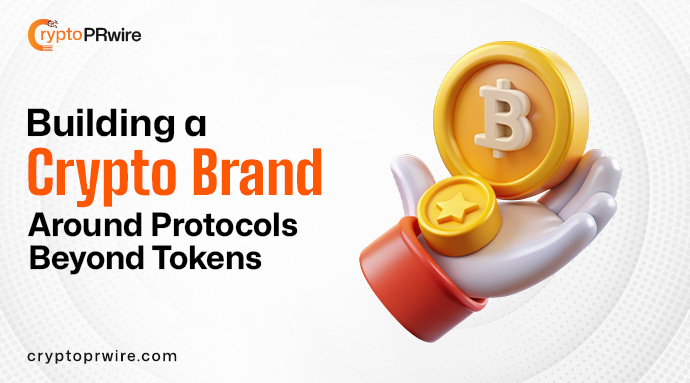
One of the most important strategic decisions a Web3 project makes often implicitly, without consciously choosing is whether to build their branding around their token or their protocol. The choice has profound implications for community quality, investor base, media narrative, and long-term survival through market cycles.
Projects that build brand around the token attract speculators. Projects that build brands around the protocol attract builders, users, and long-term holders. In a bear market, speculators leave. Builders and genuine users stay. That difference is often the difference between a project that survives a crypto winter and one that doesn't.
The Problem With Token-First Brand Building
Token-first brand building is seductive precisely because it produces fast results. Token price appreciation generates community excitement. That excitement attracts new members. New members amplify the token narrative. The cycle can create explosive community growth in a short period.
But the same dynamics work brutally in reverse. When token price declines, the community built around token appreciation has no remaining reason for loyalty. Community members who joined for price appreciation leave when price declines.
The narrative that attracted them token as investment becomes a liability when the investment underperforms. And the press coverage shifts from "project achieves record price" to "project's collapse" with equal efficiency.
Protocol-first brand building is slower and requires more technical depth in your communications. But it builds a fundamentally more durable asset: a community that cares about what you're building, not about what your token price does.
What Protocol-First Brand Building Looks Like
Technical Authority Over Price Commentary
Protocol-first projects talk about what their technology does, how it works, and what problems it solves, not about token price, market cap, or return potential. This is a communications discipline as much as a marketing strategy.
When your CEO is on a podcast, they discuss protocol mechanics, user growth, and ecosystem development. When you publish content, it covers technical architecture and user case studies.
When you announce milestones, they're user adoption metrics and TVL figures the signals of actual utility. This technical authority is the foundation of genuine thought leadership in crypto marketing.
Developer Community as Brand Bedrock
Protocols that build thriving developer communities have the most durable brand equity in Web3. Developers who build on your protocol who create projects, products, and services on top of your infrastructure become the most authentic possible advocates for your technology.
Their projects validate your protocol's real-world utility. Their documentation, their tutorials, their community engagement creates a layer of educational content that no marketing team can replicate. And their investment of time and capital in building on your protocol means they're deeply motivated to see your project succeed.
Investing in developer tools, documentation, grants, and community support is one of the highest-return brand investments a protocol can make. The developer community you build becomes your most credible media source.
Ecosystem Narrative Over Token Narrative
Frame your project as an ecosystem, not a token. The ecosystem framing "the infrastructure that enables X, Y, and Z applications" positions your protocol as a platform, not an asset. Platforms have users. Assets have prices.
This ecosystem framing pays particular dividends in PR strategy and media outreach. A story about a platform's ecosystem growth ("50 projects building on [Protocol]") is fundamentally more compelling to editorial journalists than a story about token price performance.
Navigating the Protocol-Token Tension
Many protocols have tokens that serve genuine utility functions governance, fee payment, liquidity provision. There's nothing wrong with a token. The issue is when the token becomes the primary brand identity and the protocol becomes secondary.
Keep the token in its proper role: a mechanism that serves the protocol's functions. Communicate about the token in terms of its utility and what it enables not in terms of price speculation.
When investors ask about return potential, redirect to ecosystem development and protocol adoption metrics. This positions your token correctly as a derivative of protocol success, not as an asset being promoted independently.
Protocol Branding Through PR
Press releases and media coverage for protocol-first brands look different from token-first brands.
Protocol-first press releases announce: ecosystem milestones (number of integrations, developer applications, total projects), technical achievements (security audits, performance improvements, cross-chain capabilities), and user adoption data (unique addresses, transaction volume, retention metrics).
Token-first crypto press releases announce: price records, listing announcements, exchange integrations.
Both categories of news can be legitimate PR moments. But the balance between them and the framing signals to sophisticated observers which kind of project you are.
Building consistent brand messaging around protocol value, across every channel, is the implementation discipline that makes protocol-first brand building real rather than aspirational.
Surviving Market Cycles as a Protocol Brand
The bear market test is the definitive evaluation of protocol vs. token brand strategy. In a sustained market downturn:
Token-first projects see community attrition, media narrative shift to "collapse" coverage, developer departure, and declining metrics across the board.
Protocol-first projects see community consolidation (quality rises as speculators leave), continued developer building (those building on the protocol are focused on their own projects, not token price), and media narratives that focus on technical progress despite market conditions.
The DeFi protocols that survived the 2022-2023 bear market in strong positions were almost universally those with genuine user bases, active developer ecosystems, and brand identities built around protocol utility rather than token speculation.
The projects that failed were disproportionately those where the community and brand were built around token price.
Build your protocol brand before you need it to carry you through a down cycle. The community you attract, the developers you support, and the media narrative you establish in good times are the foundation that sustains you in difficult ones.

Kartik Sharma is a content strategist and crypto PR writer specializing in blockchain, Web3, and digital marketing. With a passion for simplifying complex topics, he crafts SEO-driven content, press releases, and guides that help crypto startups gain visi